
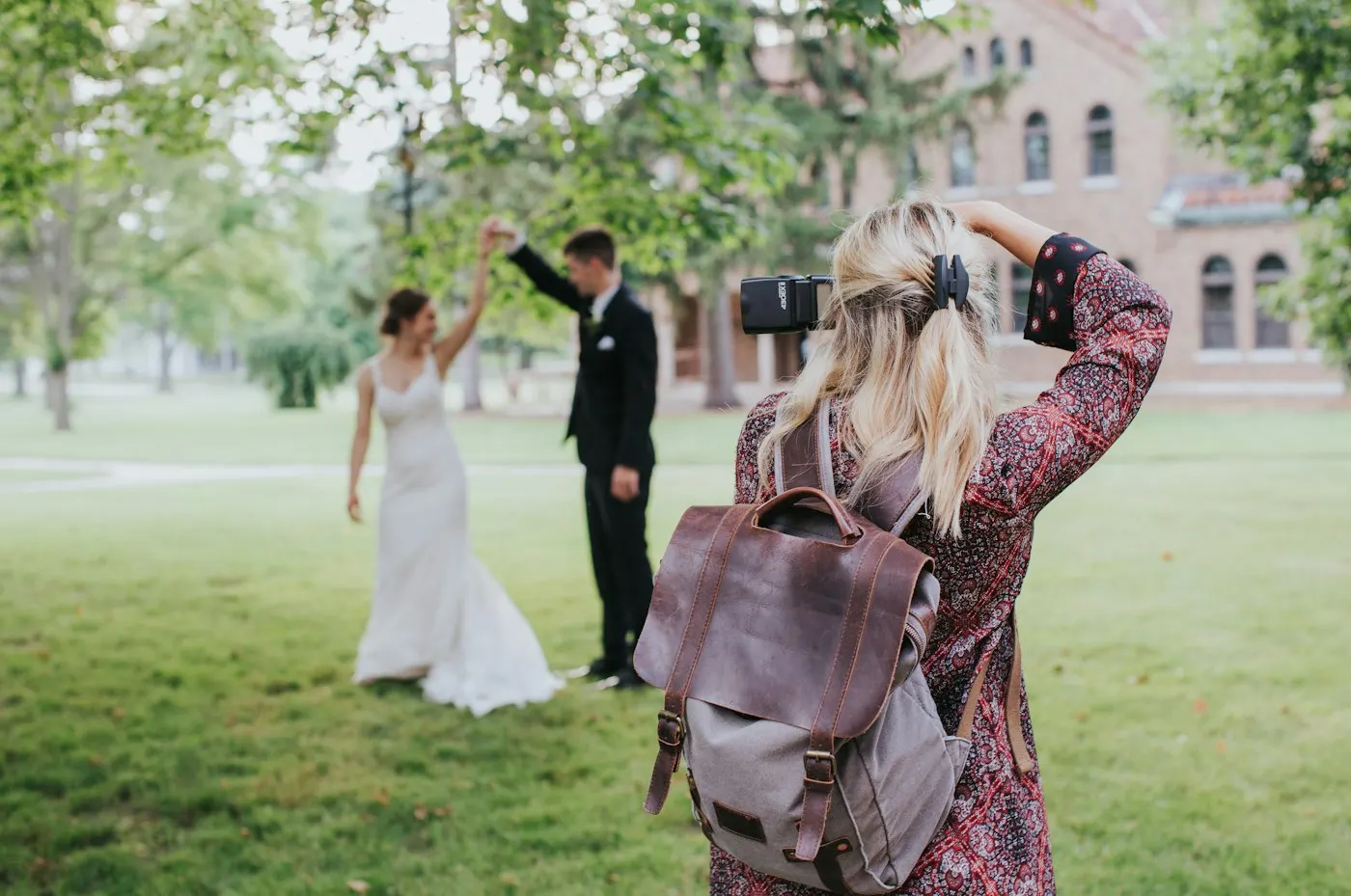
Your photographer is lining up a family portrait. Your videographer is setting up the next shot. Someone with a phone asks you to repeat your entrance for a quick video. Suddenly, three perfectly reasonable requests are competing for the same five minutes.
Hiring a wedding content creator can be a lovely way to collect candid, shareable memories. The planning question is not whether the trend is good or bad. It is whether everyone documenting your day knows how to work together without turning your celebration into a production schedule.
For an Abilene wedding, I would start with the memories you actually want to keep, then build the team around them.
What a wedding content creator does differently
A photographer generally delivers a curated collection of edited still images. A videographer's contracted work may include a highlight film, ceremony coverage, recorded speeches, or several of those things. A content creator typically concentrates on behind-the-scenes phone footage and short, often vertical clips intended for quick viewing or social sharing.
Those are broad descriptions, not guaranteed package inclusions. Some photographers already offer short-form clips. Some content creators deliver raw files only; others edit reels. Turnaround, audio quality, coverage hours, backup practices, and permission to share footage all need to be in the agreement.
The demand is real, but it is not universal. In Zola's 2026 First Look Report, based on more than 11,500 couples planning 2026 weddings, 21% said they planned to create their own social-first wedding content. That does not mean 21% hired a creator. It means couples are thinking about a second, more immediate way to remember the day.
Choose the deliverable before adding a vendor
Ask yourselves what would make you happiest the next morning:
- Informal clips of your friends getting ready and celebrating?
- A few edited vertical videos ready to share?
- A complete recording of your vows and your parents' voices?
- Beautiful still photographs for an album and your walls?
These are different priorities. Phone clips can supplement professional coverage, but do not assume they replace a film with properly recorded audio. Ask to see complete examples of exactly what you would receive, not just a creator's best fifteen seconds.
If your budget already covers the memories you care about most, an additional person may be unnecessary. A trend is an option, not a missing requirement.
Have one conversation with the whole camera team
Before signing an additional contract, check the photography and videography agreements for exclusivity or restrictions on other people filming. Then make introductions. Your coordinator should help the team agree on working positions, priority shots, and any moments that cannot be repeated.
The useful questions are specific:
- Who has the clear view down the aisle during the ceremony?
- Where can the creator stand during the first kiss and dances?
- Which portraits need everyone's attention, with no simultaneous requests?
- Who may use extra lights, and when could they interfere with another camera?
- Who tells the team if a planned moment moves?
At a venue with several rooms, a courtyard, or a narrow aisle, walking the actual space matters more than copying another wedding's shot list. Do not assume a beautiful location has room for everyone to film from the same spot.
Separate candid coverage from staged requests
There is a difference between documenting a celebration and stopping it to make something for the camera. Either can be enjoyable when you choose it deliberately.
Put any staged transitions, outfit reveals, or group videos into a short, agreed window. Choose what you are willing to skip if the day runs behind. A candid-content brief can simply say: capture what happens; do not interrupt dinner, greetings, or dancing to recreate it.
Your creator should receive the same final vendor information as everyone else. For the larger picture of how those handoffs work, see our guide to behind-the-scenes coordination. This is one team documenting one wedding—not separate productions with separate priorities.
Decide who can post, and when
You can have an unplugged ceremony and still hire someone to film it. The distinction is that your approved team is working while guests are present with you. Have the officiant communicate that boundary kindly.
Discuss whether you want the first announcement yourselves, whether previews need approval, and whether vendors can use your footage in their own marketing. Specify private moments, children who should not appear in public clips, and guests who prefer not to be filmed. Share those preferences discreetly with the people who need them.
Also ask how files arrive, how long the download remains available, and how you can back them up. A social account should not be the only place your memories live.
A simple brief to send before the wedding
Write down your priority moments, the lead contact for each vendor, your posting boundaries, and the few staged clips you actually want. Add one clear instruction: if requests conflict, check with the coordinator rather than asking the couple to solve it in the middle of the reception.
My test is simple: will this help you enjoy and remember the wedding, or give you another job during it? If you want help bringing your vendor team together, talk with us about coordination. The best documentation plan leaves plenty of room for a wedding worth documenting.
The Journal, Delivered
Planning a Big Country wedding? Get our best tips in your inbox.
No spam — just new Journal articles and booking-season reminders. Unsubscribe anytime.
Keep Reading
More from the Journal
 Planning
The Wedding Regrets Real Couples Talk About After the Honeymoon
 Planning
 Planning